When Good Food Goes Wrong
A high-end meat scandal, a food system eating itself alive, and the solution already taking root

This is Part 1 of Sacred Ground, a 4-part series exploring the environmental, economic, cultural, and spiritual dimensions of our food system - and the tangible ways we can participate in transforming it through regenerative agriculture.
It was May 26, 2021, and butcher Evan Reiner had reached his breaking point with his employer, Belcampo. “The meat at @belcampomeatco is not local anymore,” he wrote over a selfie, vacuum-sealed packages visible behind him. “It is ordered from west coast prime and rocker brothers. It is not organic. It is not grass-fed. They are lying to your face and charging $47.99/lb for filet that is either USDA choice and corn-fed or from a foreign country.”
Within hours, Reiner’s post ricocheted across social media. The SF Chronicle picked up the story: “Sustainable meat darling Belcampo admits to mislabeling meat at a Southern California location.” Eater followed with an investigative piece titled “Belcampo’s Meat Deception Is Deeper Than It Let On.” Within four months, the LA Times reported that “After sourcing scandal, Belcampo Meat Co. abruptly closes stores, restaurants.”
What makes this collapse so striking isn’t just the speed of it, but what Belcampo represented. This wasn’t your typical greenwashing scandal involving some faceless corporation. Belcampo embodied our highest aspirations for how food could be different. They operated a 27,000-acre ranch in California, raising 2,500 cattle with regenerative agricultural practices. They owned their own slaughterhouse and seven butcher shops and restaurants across San Francisco, Los Angeles, and New York City. They served $32 hamburgers topped with raclette cheese in Santa Monica and were featured in the meat section of that high-temple of wellness culture, Erewhon. Their marketing consisted of happy animals grazing at the base of Mount Shasta, smiling attendees at their annual Meat Camp, and earnest discussions of carbon-sequestering ranching practices.
With $50 million in backing and a business model that promised to prove regenerative ranching could be profitable, Belcampo was supposed to be the proof point that idealism and capitalism could actually coexist in the meat business. They were going to show that vertical integration, controlling everything from pasture to plate, could reduce supply chain costs while increasing transparency and getting premium products to markets willing to pay for quality.
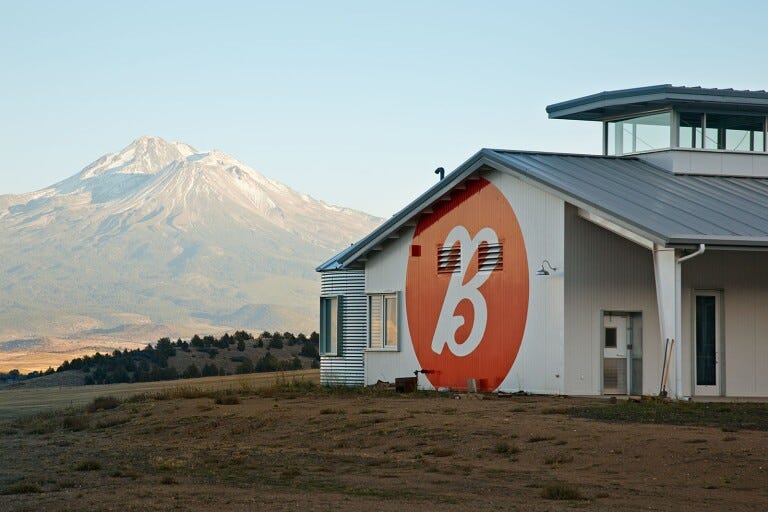
If you’d asked my giddily optimistic self five years ago to describe the future of ethical food, I might have described something that looked a lot like Belcampo.
But when faced with the fundamental challenge of meeting customer demand for popular cuts of meat, they crumbled. Their vertical integration, which was supposed to be their strength, became their weakness; with such limited production, they couldn’t supply the volume of ribeyes and filet mignon their retail locations demanded. Rather than tell customers that those cuts were temporarily unavailable, they bought commodity beef for a few dollars per pound and sold it at premium prices - sometimes charging $47.99 for filet mignon that cost them less than half that price to procure.
This was something more troubling than corporate greed. It suggested that our vision of sustainable food systems might be fundamentally incompatible with the economic realities of feeding people in America. Belcampo’s failure threw some proverbial rotten cabbage at my optimism for the future of food; but after a few years, drawing on my own experience working at a sustainable grocery company and plenty of early morning research, I’ve arrived somewhere unexpected: I remain hopeful. Perhaps Belcampo’s failure reveals something deeper about the industrial system they were competing against, and points to where the real solutions lie. That’s what this essay series will explore.
Understanding the Crisis in Our Food System
To understand why Belcampo’s collapse matters, I need to walk you through what our current food system actually looks like, what it’s quietly doing to the world around us, and why it is so difficult to change. I know the temptation for eyes to glaze over when the carbon footprint data starts rolling in, but what I’ll cover isn’t abstract climate hand-wringing, it’s how we’re systematically depleting the actual resources we need to feed ourselves.
Our method of growing and raising food contributes roughly 13% of global greenhouse gas emissions, but that only captures a portion of the true impact. Add related practices such as deforestation for clearing farmland, transportation, processing, and food waste, and our food system accounts for about a third of all global emissions.
These statistics illustrate the impact our agriculture has on the existential threat of climate change, but they still don’t capture the extent of the risks living in our current food system. Tom Philpott’s comprehensive 2022 book Perilous Bounty documents a triad of threats that should make us genuinely worried about the future of American agriculture itself: groundwater depletion in California, soil erosion in the Midwest, and increasingly extreme weather everywhere. Rather than distant future risks, these are present realities already reshaping how and where we can grow food that sustains us.
Consider just one example that Philpott explores regarding erosion in the Midwest: research suggests that farmland can replenish a half-ton of soil per acre each year, restoring the nutrients which the crops had previously extracted and will require in future growing seasons; however, current estimates show that Iowa corn farms erode 8 tons of topsoil per acre annually. The nutrient-rich soil required to feed the US is being depleted at a rate 16x faster than it can be restored given current farming practices, especially exacerbated by the unpredictable heavy rains that come with climate change. This loss of viable growing soil has the potential to make vast areas of what we think of as America’s breadbasket no longer farmable. Meanwhile, chemical fertilizer runoff funneled into the Mississippi River creates dead zones in the Gulf of Mexico where nothing can survive for thousands of square miles. Rural communities across the Midwest drink water contaminated by agricultural chemicals. Climate change already affects agricultural productivity, with recent studies estimating that for every 1°C rise in temperature, global food production will decline by 120 calories per person per day.
The most troubling fact is that our industrial agricultural system is systematically depleting the very resources it depends on. We’re degrading our soil, pumping aquifers dry, and treating these fundamental sources of life as inputs to be consumed rather than resources to be maintained. No one more-clearly describes the destruction and implications of our farming practices than the farmer-poet Wendell Berry, who has spent decades thinking about these connections. I will draw on Berry’s wisdom early and often in this series, and in The Unsettling of America he offers a useful analogy: “To use an economic metaphor, [industrial agriculture] is living off the principal rather than the interest. It has broken out of the system of nurture and has become exploitative; it is destroying what gave it life and what it depends upon to live... To live at the expense of the source of life is obviously suicidal.”
We live in a world full of alarm bells, and resulting fatigue of the ever-replicating crises in the news cycles, but this one deals with the most fundamental of necessities: how we feed ourselves. Which brings us to the question that we’ll explore further next: if the dangers are so clear, why is change so difficult?
The Efficiency Argument: Why Change Seems Impossible
The most intellectually distilled challenge to anyone who wants to reform our food system is that, for all its flaws, our current system represents our best option for feeding the booming global population. Journalist Michael Grunwald articulated this position forcefully in his controversial 2024 New York Times essay, Sorry, but This Is the Future of Food. His argument is straightforward: we need to feed 10 billion people by 2061 on a planet with limited farmland, and industrial methods of agriculture produce more calories per acre than alternatives:
Old MacDonald-style farms where soil is nurtured with love and animals have names rather than numbers may sound environmentally friendly. But their artisanal grains and grass-fed beef are worse for nature than chemical-drenched corn and feedlot-fattened beef because they require much more land for each calorie they produce.
Grunwald believes that efficiency should be agriculture’s north star. If we converted all our farmland to more sustainable methods tomorrow, we’d need significantly more land to produce the same amount of food, which means clearing more forests and grasslands.
The key point, obscured by our cultural nostalgia for the quaint farmsteads of yesteryear, is that old-fashioned agriculture made much more of a mess when it replaced nature than intensive industrial agriculture makes when it replaces old-fashioned agriculture.
I spent a lot of time wrestling with this argument, because much of it is valid. It suggests that our current system, for all its flaws, represents our best option for feeding humanity while minimizing environmental damage. His position assumes the system is too big and messy, we have no viable alternative, so we must plow ahead while trying to lessen its harm. The problem with Grunwald’s thinking, I believe, isn’t his logic and data, but rather this assumption that we’re powerless to change course - and that we can afford not to try. Making a self-destructing system marginally less harmful cannot save it.
So let’s examine what industrial agriculture actually delivers versus what it promises. First, Grunwald’s argument assumes our current system is efficient. In reality, 55% of grains produced in the US aren’t directly consumed by humans - much goes to animal feed for industrially raised cattle that could graze on grassland, while government mandates convert 10% of corn into ethanol fuel to prop up prices. Meanwhile, 30-40% of all food produced is wasted before reaching consumers.
The scale of these numbers is really quite staggering. For every 10 pounds of food produced, 3-4 pounds don’t make it to anyone’s plate, much of what remains feeds industrial livestock or gets converted to fuel, and the system still claims efficiency as its north star. With that level of waste, the primary bottleneck isn’t land - it’s the convoluted system propped up by bad farm policy. Much of this waste occurs in the supply chain itself, with 14% lost between farm and retail due to our globalized distribution networks. As I’ll discuss in a later post, regional distribution and shorter transportation routes could dramatically reduce these losses while supporting local economies. Despite all this waste, the industrial supply chain does deliver something alternatives struggle to match: consistent variety and supply - the challenge that led Belcampo to start buying commodity beef when their own ranch couldn’t supply the cuts their customers demanded.
Second, Grunwald’s argument glosses over externalities - costs that don’t show up in market prices but are very tangible. Industrial agriculture appears efficient only if you don’t count cleaning up water contamination, treating diet-related diseases, or supporting rural communities hollowed out by agricultural consolidation.
Third, the efficiency argument assumes we can continue current practices indefinitely. But industrial agriculture is systematically depleting the soil and water it depends on. A system that destroys its own foundation cannot be called efficient in any meaningful sense.
Grunwald is right that industrial agriculture produces more calories per acre today, that farmland scarcity is a real problem, and that a system this large needs near-term reforms - especially policy-driven ones- to reduce harm. But what I take issue with is his defeatism about alternatives. When someone with his platform in the New York Times, where most Americans rarely encounter food and agriculture topics, dismisses alternative methods as quaint but irrelevant, he’s not just describing the status quo, he’s actually reinforcing it. Even if industrial methods produce more calories per acre today, a system that destroys its own foundation cannot be our only strategy. We need a transition path that’s economically viable before resource depletion forces the issue.
An alternative taking root
The alternative Grunwald dismisses, those “Old MacDonald-style farms”, deserves a closer look. There’s a different path forward, harder and less straightforward than tweaking industrial methods, but already being demonstrated: regenerative agriculture. The term itself has become so diluted by marketing and misuse that many serious advocates question whether we should use it at all, which is why we must define it clearly by its specific practices. The word “regenerative” contrasts its methods with the degenerative nature of conventional farming, which systematically breaks down soil biology, depletes nutrients, and reduces the land’s capacity to produce food over time unless one relies on chemical inputs. Regenerative farming does the opposite: it restores and systematically improves soil health and growing capacity over time by enhancing the natural biological processes it relies on. We can group specific regenerative practices into five categories:
Cover cropping: Planting additional, non-conventional crops during the offseason such as winter rye, oats, and radishes. Conventional farmers traditionally plant only one crop per year - alternating between corn and soy - while leaving fields bare during winter, allowing nutritious topsoil to erode away through offseason rains and wind. The roots of winter cover crops retain organic matter in the soil, providing key nutrients for the next growing period: a life-generating plant cocktail that includes nitrogen to power plant growth, phosphorus to boost root development, potassium to resist pests, calcium for cell wall structural integrity, and magnesium to aid photosynthesis.
Crop rotation and diversification: Growing different crops sequentially in a given field or co-planting crops together, harnessing the symbiotic benefits of biodiversity. For a traditional example many of us learned in school, the Indigenous American practice of co-planting the “three sisters” - corn, beans, and squash - creates a nutritionally complete and mutually beneficial trio. The corn provides a natural trellis for the bean stalks, the beans fix nitrogen in the soil for the corn and squash to use, and the squash suppresses weeds while deterring pests on the ground. Another method gaining popularity is agroforestry, in which rows of trees are grown alongside crop fields. These tree rows protect fields from water and wind erosion while fostering diverse communities of birds and insects that help control pests and encourage healthy plant pollination.
Livestock integration: Much like crop rotation, this practice boosts soil nutrition. By strategically grazing cattle, chickens, and pigs on cover crops or offseason grasses, regenerative farmers not only reduce animal feed costs but also mimic the natural ecosystem patterns of American prairies. Industrial livestock feedlots must purchase grains like corn and soy to bulk up animals, propping up the commodity crop market, while toxic manure and chemical runoff pollute surrounding water sources. Integrated livestock management leverages manure as a benefit - providing nutrient-rich organic matter for future crops. Meanwhile, the trampling of cow hooves and rooting of pigs provides natural aeration and mixing of topsoil that native grasslands of the US evolved to thrive with. Over-grazing too many heads of livestock on too little acreage can destroy soil health, so rotation and monitoring of herds is critical.
Minimal tillage: Soil structure is key in regenerative agriculture. Establishing organic matter in topsoil, paired with proper livestock grazing, can improve water absorption and retention in growing fields, enable deeper root penetration, and enhance soil biology. Tillage is the mechanical manipulation of fields using plows to break up topsoil, which in conventional agriculture creates smooth seedbeds, disrupts weed growth, and mixes in fertilizers. Just as tillage kills weeds, it also kills beneficial soil biology like fungal networks and worm tunnels. It increases erosion risk, over-compacts soil, and increases reliance on chemical inputs. Other regenerative practices such as cover cropping, crop rotation, and livestock integration can achieve similar benefits without tillage.
Composting & natural inputs: Finally, regenerative farming often incorporates natural additions such as compost - decomposed organic matter from food scraps, yard waste, and manure - to further enrich soil nutrients. A mature, already-healthy pasture may not require it, but concentrated, microbe-rich compost is often necessary to restore degraded soil and aid healthy plant growth. In contrast to industrial inputs like chemical pesticides and herbicides that may harm soil and surrounding communities, additional natural inputs used in regenerative practices include materials such as kelp meal, biochar, and worm castings, all of which can enhance nutrient availability, water retention, and overall soil health.
One challenge with proposing regenerative practices as a solution is that the methods can and must vary based on the location of the farmer, adapted to the unique climate and natural resources of the bioregion. A major advantage of industrial practices is that they can often be applied out of the box regardless of location - powerful chemicals and herbicide-resistant GMOs can override the biological forces of the region, and allow the agribusinesses that make them to expand their addressable market to generate more profits with a single innovation. Regenerative agriculture is quite different conceptually; although it can be defined by the five practices outlined, there is much nuance within each and requires a knowledgeable, observant, and creative farmer: using strategic cover crops like crimson clover in the Southeast versus winter rye in the upper Midwest, selecting perennial trees like chestnuts in the Eastern US versus hazelnuts in the Pacific Northwest for agroforestry systems, and developing rotational grazing patterns that work with seasonal rainfall by moving cattle frequently during wet seasons to prevent soil compaction, while extending grazing periods during dry spells when plant recovery is slower. I believe Grunwald gravitates toward expanding less-harmful industrial practices precisely because it offers the illusion of a simple, scalable solution that can be blanket-applied globally. But this thinking perpetuates the very problem regenerative agriculture seeks to solve: the assumption that we can impose uniform systems on diverse ecosystems. So the challenge is less that better methods don’t exist, and more that transforming a system this large requires embracing complexity and developing region-specific solutions rather than continuing to force standardized approaches onto varied landscapes.
But what ultimately has me and many others genuinely excited is that regenerative agriculture is more than just a sustainable way to produce food. It delivers clear economic benefits for the farmers who adopt it and nutritional benefits for those who eat it. These economic benefits are being proven out as we speak. A Boston Consulting Group analysis found that farmers transitioning to regenerative practices see profitability increase 70-120% versus conventional operations once established, with 15-25% returns over ten years. An Ecdysis Foundation study showed that while yields initially drop 29%, farmers achieve higher relative income per acre through diversification and reduced input costs as soil improves. The research is still early and much work remains to prove these economic models across different regions and farm types, but the initial data points in a genuinely promising direction.
The food quality and nutrition case is equally compelling. Ask anyone who regularly eats regeneratively grown vegetables and they’ll likely tell you they taste the difference - more flavor, better texture, greater complexity. As chef Dan Barber points out, superior taste indicates higher nutrient density, likely driven by more polyphenols, which are plant compounds that act as antioxidants and reduce inflammation. Dr. Autumn Smith, a nutritionist and founder of Wild Pastures, cites studies showing regeneratively raised beef contains 4x higher omega-3 fatty acids - anti-inflammatory fats linked to heart and brain health - along with elevated minerals. This emerging science suggests soil health directly translates to both better flavor and higher nutrient density, something that even organic certified foods can’t claim.
If regenerative practices become more profitable for farmers while producing more nutritious food for consumers, creating value on both supply and demand sides, this could be a viable alternative with product market fit that grows beyond a niche luxury market. The challenge is demonstrating these benefits clearly enough and building infrastructure to support farmers through transition - infrastructure that would have prevented companies like Belcampo from being trapped by their single-ranch model, forced to choose between disappointing customers when popular cuts ran short or compromising their values by sourcing commodity beef. With networks connecting regenerative farmers to capital and markets, and supply chains that maintain transparency at scale, smaller operations can compete with methods that work well today but undermine tomorrow’s productivity. I acknowledge I may be naive and overly optimistic. But based on everything I’ve outlined here - the resource depletion, the economic data, the nutritional benefits - that’s a risk I’m willing to take.
This is the first of four installments in the Sacred Ground series, in which we examined the environmental and economic case for change. The next post covers the sociological stakes: what happens to communities, culture, and how we situate ourselves in the world when we sever the connection between people, food, and place?